How Manufacturing Plants Are Using Managed Transportation to Control Inbound Freight
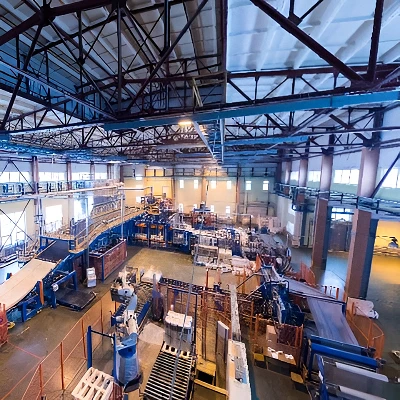
Inbound freight has quietly become one of the most expensive variables in modern manufacturing. While outbound shipments are typically governed by tight commercial terms, inbound moves are often left to suppliers, carriers, and ad hoc purchase order arrangements. The result is a fragmented flow of trucks, parts, and paperwork arriving at the dock with little coordination and even less visibility. As input costs rise and production schedules tighten, plant operators are turning to managed services to bring this side of the supply chain under disciplined control.
That urgency is well-founded. According to Inbound Logistics’ 2025 Trucking Perspectives survey, transportation costs ranked as the single biggest challenge for shippers, cited by 74% of respondents, a figure that has held the top position for three consecutive years. For plant operators managing complex inbound networks, that pressure is acutely felt on the receiving dock.
Industry studies consistently estimate that inbound freight accounts for between forty and sixty per cent of total transportation spend at a typical manufacturing site, yet it tends to receive a fraction of the procurement attention given to outbound. That imbalance is the gap managed transportation programmes are designed to close.
The Hidden Cost of Supplier-Controlled Inbound
In a traditional inbound model, suppliers ship on their own terms, using their own carriers and building freight charges into the unit price of the goods. On the surface this appears convenient, but it conceals significant inefficiency. Plants receive multiple part-loaded trucks from different suppliers in the same region, pay marked-up freight embedded in component costs, and absorb the dock congestion that follows. Receiving teams spend hours rescheduling appointments and chasing missing paperwork, while production planners work without reliable arrival data.
What Managed Transportation Brings to The Plant Floor
A managed transportation service combines a transportation management system, dedicated planning analysts, and carrier procurement expertise into a single operational layer. Rather than acting purely as a software provider or a freight broker, the managed transportation partner operates as an extension of the shipper’s logistics team. For inbound applications, this typically involves three coordinated activities: converting supplier shipments to a buyer-controlled routing model, consolidating freight across suppliers and lanes, and applying continuous performance management to the carrier base.
The scale of investment behind these programmes reflects genuine market demand. According to Armstrong & Associates, the total value of the U.S. 3PL market reached $307.9 billion in 2024, up 2.8% year over year, with gross revenues projected to grow a further 4.5% to $317.2 billion in 2025. The segment that includes managed transportation is a core driver of that base. Manufacturers are not experimenting with these programmes; they are scaling them.
Shifting From Prepaid to Collect Terms
The first lever most plants pull is converting supplier shipments from prepaid to collect, or to a routed prepaid-and-add structure. Under collect terms, the manufacturer designates the carrier and pays freight directly, removing supplier mark-ups and gaining line-of-sight to actual transportation costs. Procurement teams can then renegotiate component pricing on a freight-excluded basis, which often surfaces savings that were previously buried inside the part cost.
Executing this shift across hundreds of suppliers is where managed transportation earns its place. The partner publishes routing guides, onboards suppliers to a vendor portal, validates load tenders against the routing rules, and resolves the exceptions that inevitably arise. Without that operational backbone, a routing programme tends to erode within months.
Consolidation, Milk Runs, And Pool Distribution
Once inbound moves are visible in a single system, opportunities to consolidate emerge quickly. Suppliers clustered in the same region can be combined into multi-stop truckloads or milk runs, with a single carrier collecting parts on a scheduled cadence rather than each supplier dispatching its own less-than-truckload shipment. Pool distribution centres allow long-haul truckloads to be deconsolidated near the plant and delivered on a metered schedule that matches production demand.
The financial impact is usually material. Manufacturers that move from supplier-controlled LTL to consolidated truckload programmes commonly report inbound freight reductions in the range of fifteen to twenty-five per cent, alongside fewer dock appointments and lower receiving labour requirements. Freight consolidation, according to FreightWaves, can reduce transportation costs anywhere from 30 to 70 per cent compared to direct LTL shipping when volume is sufficient, which underscores why consolidation sits at the centre of most inbound programmes.
Dock Scheduling and Production Alignment
Cost reduction is only part of the value. Managed transportation also gives plants the data needed to align inbound flow with the production schedule. Dock scheduling tools assign appointment windows based on line requirements rather than carrier convenience. Real-time visibility platforms surface late shipments early enough for planners to adjust sequencing, reallocate labour, or pull from safety stock before a line stops.
In high-mix manufacturing environments, where dozens of components must converge at a specific hour, that level of coordination is the difference between a balanced operation and a chronically reactive one.
Building The Business Case
Plant leaders evaluating managed transportation should expect their partner to baseline current performance across four dimensions:
- Landed cost per inbound shipment, separated from component pricing
- On-time arrival performance by supplier and lane
- Mode mix and trailer utilisation across the inbound network
- Receiving labour hours and dock door utilisation
A credible programme will model the savings achievable through routing conversion, consolidation, and carrier rationalisation against the cost of the managed service itself. In most mid-sized manufacturing networks, the payback period falls inside the first year, with compounding benefits as supplier compliance matures and data quality improves.
From Tactical Relief to Strategic Capability
Manufacturers initially adopt managed transportation to address acute pressure: a capacity crunch, a margin squeeze, or a tariff shift that exposes inbound vulnerability. The programmes that endure, however, do so because they become a strategic capability rather than a tactical fix. With clean data, controlled carrier relationships, and engineered flow patterns, plants gain the agility to absorb new product launches, nearshoring decisions, and demand volatility without rebuilding their logistics function each time.
Inbound freight will never be glamorous, but it is increasingly recognised as a determinant of manufacturing competitiveness. The plants that treat it as such, and that invest in the systems and partnerships needed to manage it properly, are the ones positioning themselves to compete on cost, service, and resilience over the next decade.
Author Bio:

By Nate Schwandt
VP of Sales & Marketing, Alpha Zero Logistics
Nate Schwandt is the Vice President of Sales & Marketing at Alpha Zero Logistics, where he leads commercial strategy and go-to-market execution for complex, high-stakes supply chains. With a background spanning logistics, transportation, and B2B growth, he focuses on building scalable systems and long-term partnerships across aerospace, manufacturing, energy, and industrial markets.
 Our Services
 Media Pack Download
 Newsletters
 Industrial Events